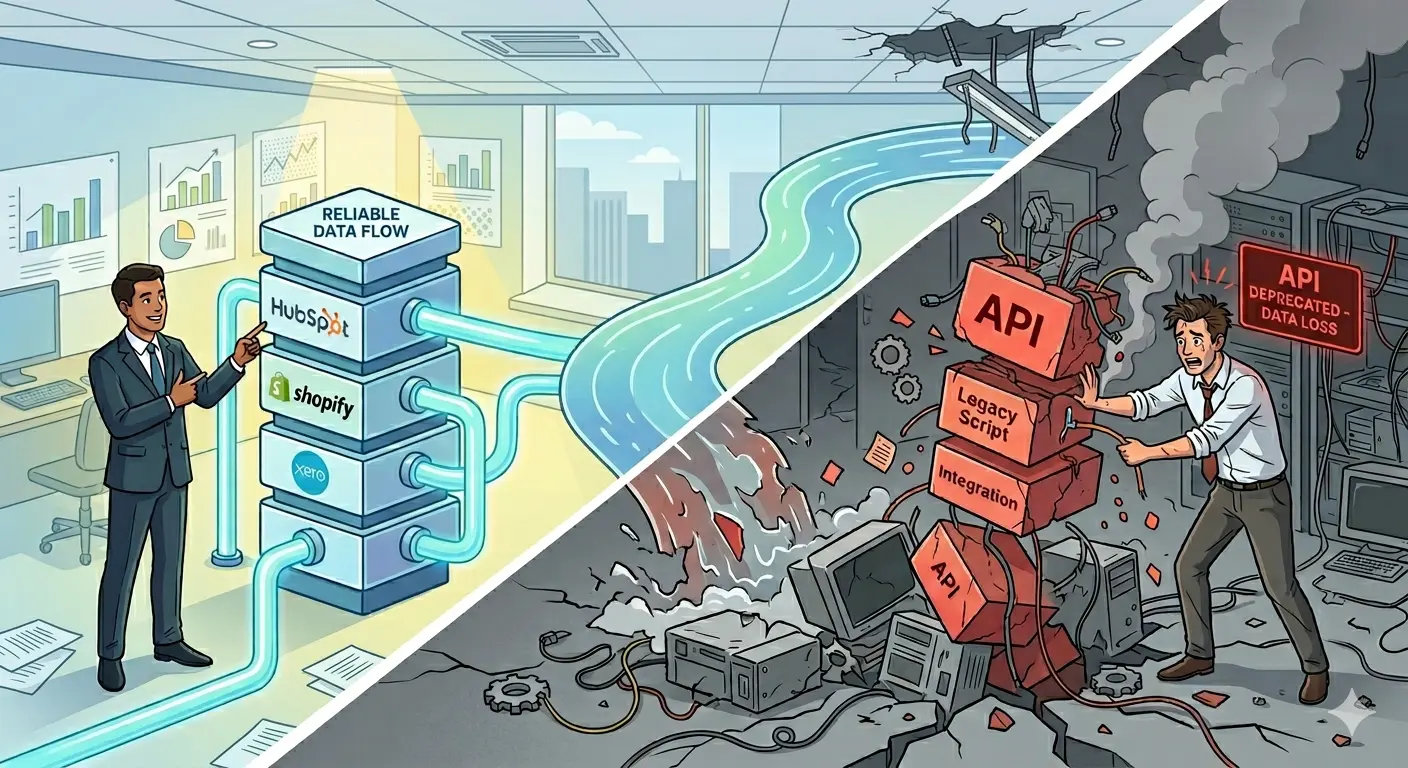
Treating custom integrations as a one-time project introduces a ticking clock of silent failures. A look at why dynamic software stacks require continuous engineering oversight.

Read More
4 min
Treating custom integrations as a one-time project introduces a ticking clock of silent failures. A look at why dynamic software stacks require continuous engineering oversight.
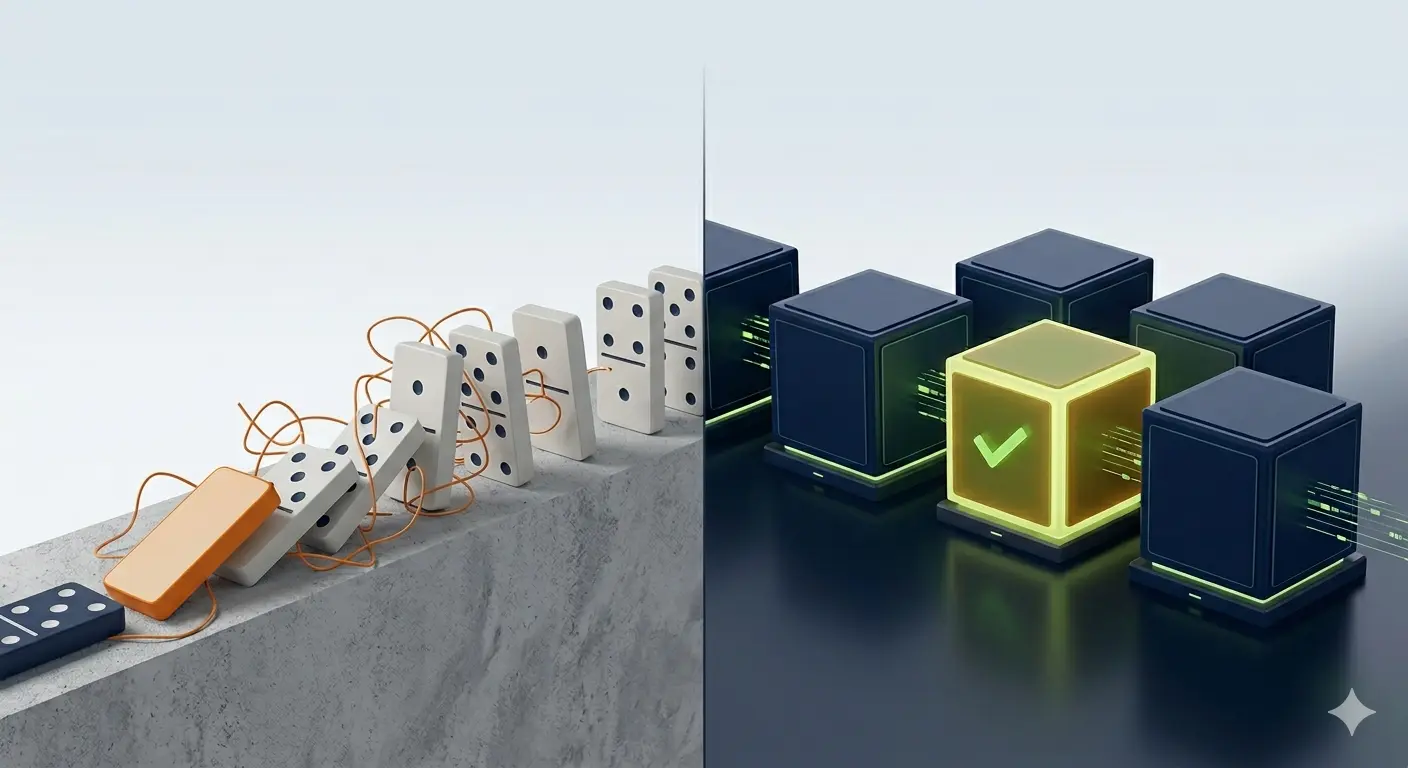
Building robust workflows by gracefully handling automation failures and avoiding the happy path bandits.

Everybody wants to be the best. But are you trying to operate at an advanced level before you've covered the basics?
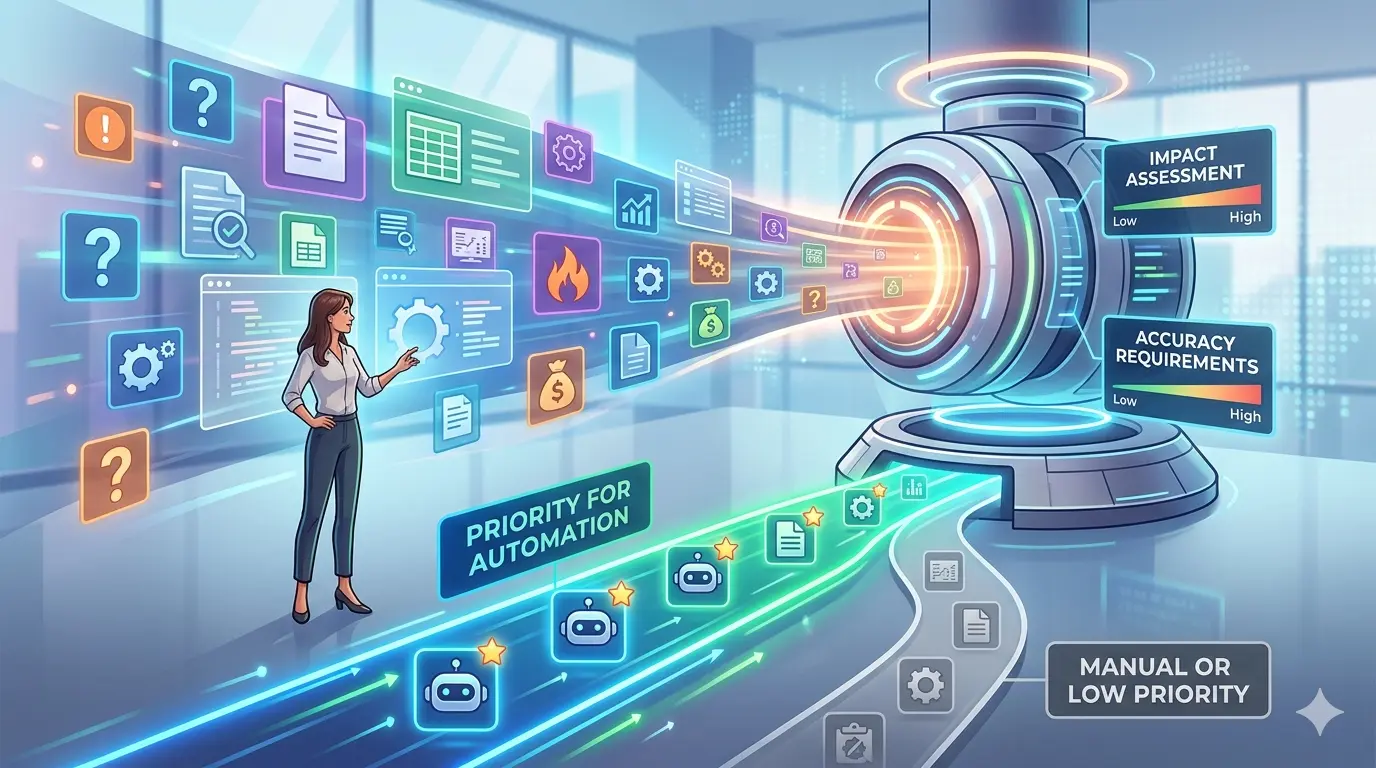
You have a ton of jobs to do. You know you can automate some. But which?

A deep dive into how we rescued a Xero-to-FTP integration by implementing a database-powered transformation layer that outclassed standard no-code automation tools.
See how we bridged the gap between Shipstation and DPD for a UK retailer, automating 800+ daily order registrations and eliminating manual admin overhead.
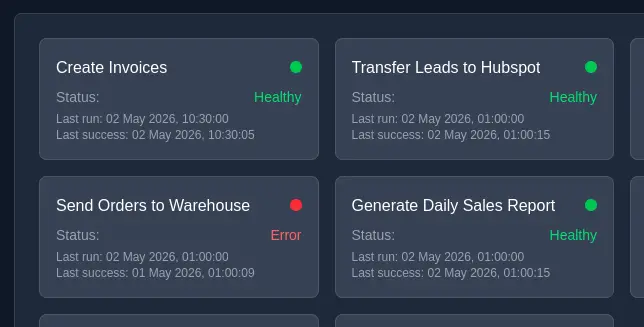
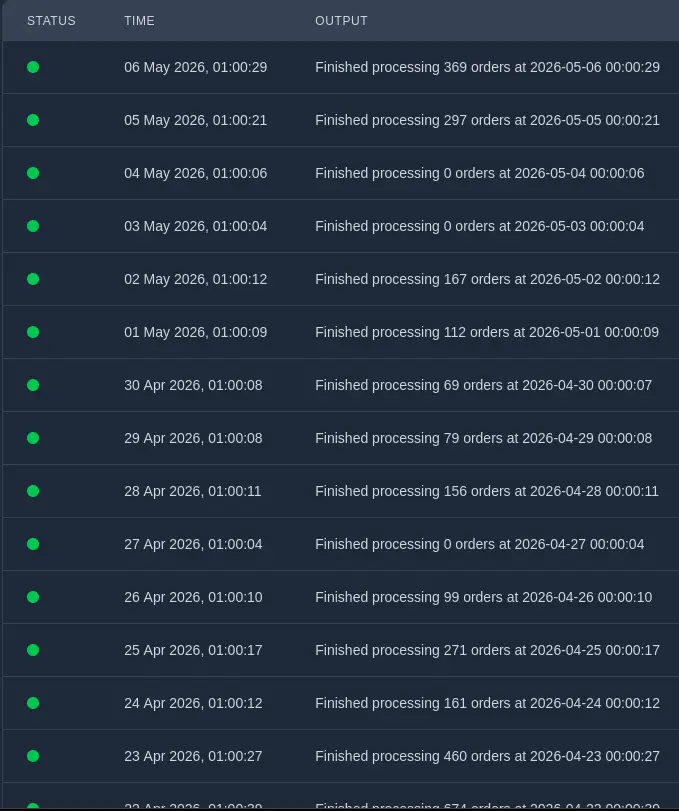
There’s a thought that goes through everyone’s mind the first time they let a computer execute a task: “how do I know if it worked?”.
When you do a job yourself, it may be tedious, it may be frustrating, but at least you know it’s done. We all use technology, and we all know that it can fail. And nothing can hurt a small business’s momentum like thinking a job has been done that hasn’t.
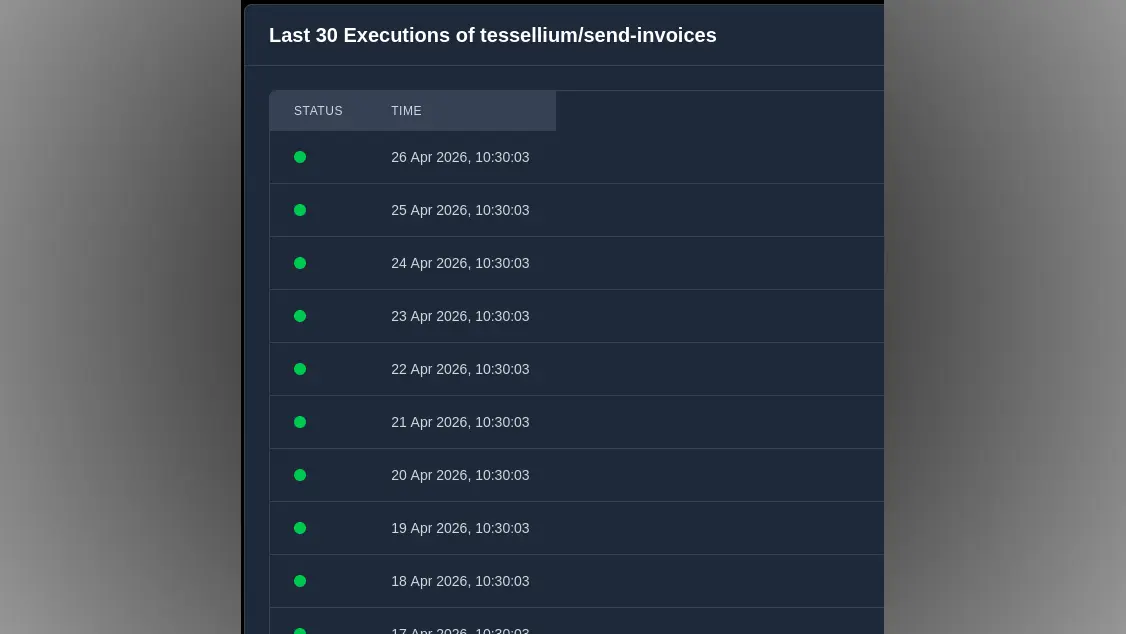
Billing is simultaneously the most important, and also the most frustrating task for a business. Important because, well, it’s your revenue for goods and services sold. But also frustrating because you have to really focus and make sure you’re not making mistakes. Smooth business operations require invoicing the right customer at the right time for the right amount.
It’s a situation I found myself in. Because we have automations going live at different times, it means we have invoices going out at different times too. Every day I would be sitting with Xero open in one window and our customer list in another, carefully copying data across into the New Invoice form, triple-checking to make sure I wasn’t making any mistakes.