Deciding What To Automate
 Ian Edwards
Ian is a senior engineer and the founder of Tessellium. Combining over a decade of technical experience with his background as a business owner, he specializes in untangling complex operational bottlenecks and getting stalled software projects over the finish line.
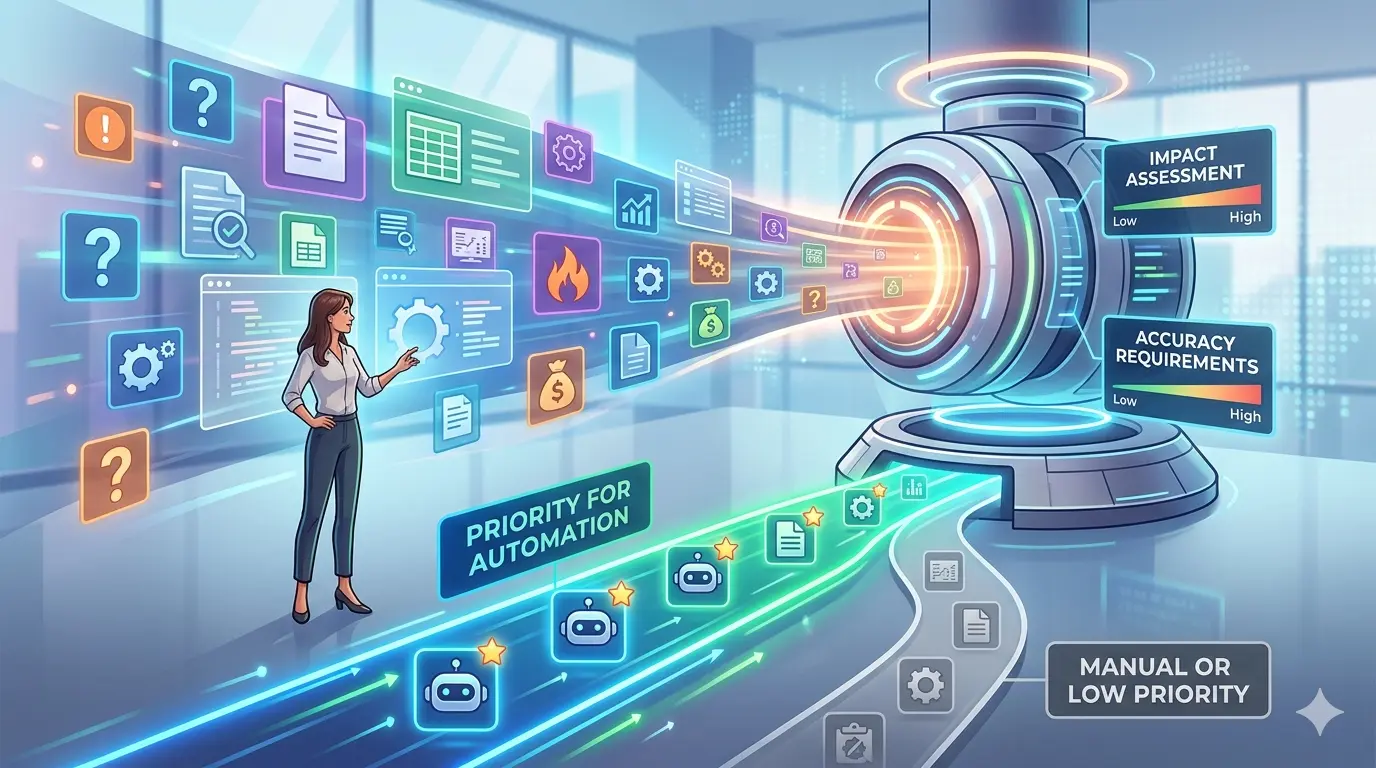
You have a ton of jobs to do. You know you can automate some. But which?
It’s not just about possibility. Automation tools have been able to perform most digital work for decades now, and AI can now solve some of the problems traditional tools couldn’t. But while automation can save time in the long run, it inevitably costs time in the short. And if the problem only exists in the short term, then automation may not be helping.
Breaking it down
The first dimension I like to look at is “what happens if this task doesn’t get done?”. If the answer is “nothing”, then… why am I doing it at all, automated or not? If the answer is that it will cause serious problems down the line, like somebody getting hurt, or financial issues, then it absolutely should be automated, no matter how complicated it is to do so. Everything else exists on the spectrum between those two.
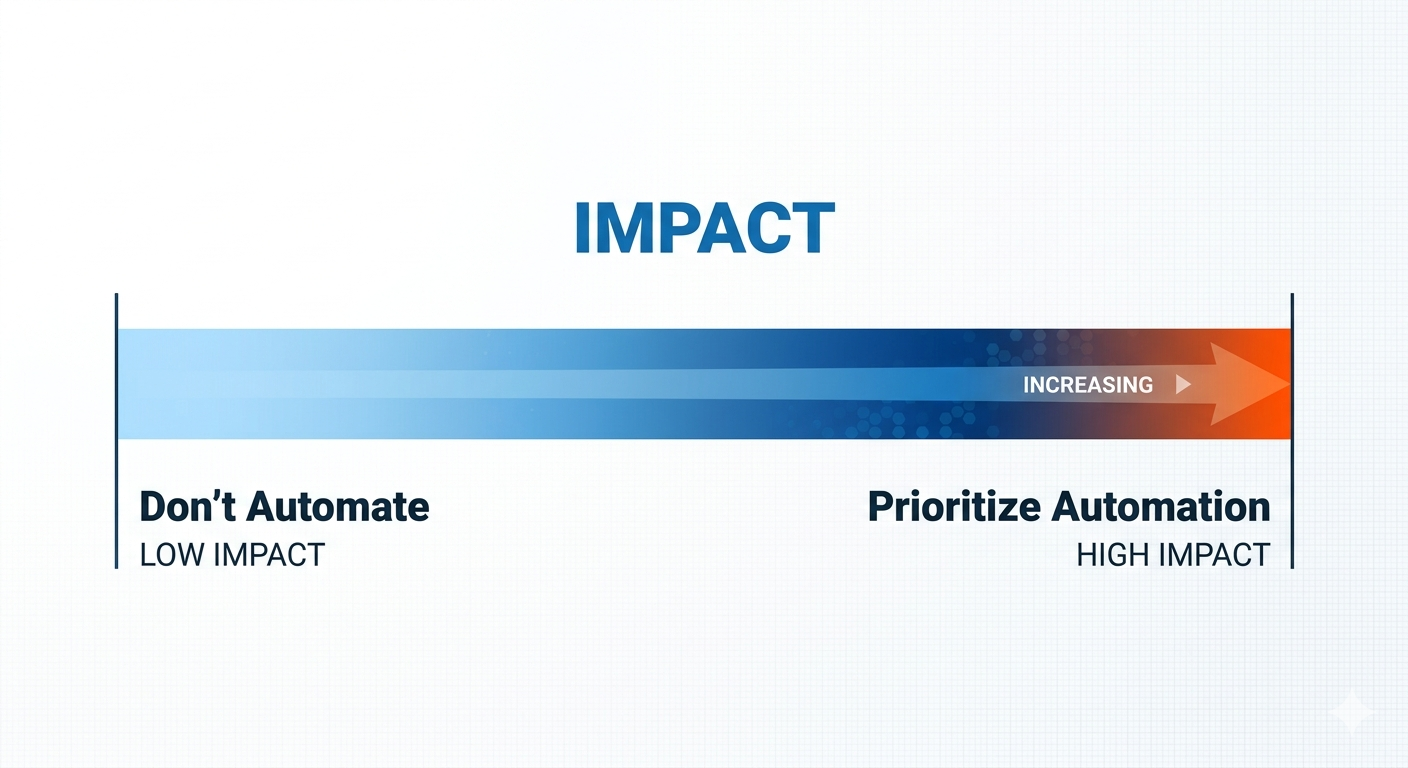
The second dimension I look at is “how important is it that this is done correctly?”. This most often relates to data work where, if the data is innaccurate, then it becomes less useful. One of my first jobs was data entry for the local council, and I had a spreadsheet of 500 records of local constituents to be copied into an Oracle database. It took longer to automate than it would have taken to just copy the data by hand, but I automated it anyway because being accurate was more important to those constituents than being fast.
| Impact | |||
|---|---|---|---|
| Low | High | ||
| Accuracy | Low | ❌ | ✔️ |
| High | ✔️ | ✔️ | |
For everything that falls between, prioritize tasks with the biggest consequences for non-completion, though it’s worth nailing the basics before tackling advanced automation.
Once you’ve decided what to automate, the next step is protecting your data structures. See our breakdown on Why AI Agents Don’t Care About Your Balance Sheet to learn how to insulate your business from silent pipeline failures.
If you’re looking to take advantage of automation, but don’t know where to start, we can help identify the areas of your business that could see the biggest gains.